


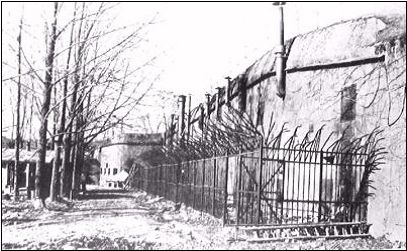
the concrete structures on the westward approaches to the fort, one after another, with huge satchel
charges of Composition C2.
Exterior view of Fort Koenigsmacher cut off from relief and finally conquered.
In the same manner, attacks were launched against the shelter points or sally points which
guarded the entry into the underground portion of the fortifications. These points were one-story
concrete pill boxes jutting up from the bare hillside. Each had one small entrance, protected by guard
room, leading to staircases descending to the underground quarters of Fort Koenigsmacher. In many
cases, infantry-engineer teams rushed through heavy fire into the entrances of the shelter points and
placed the demolition charges on a staircases leading below. In this way, the exits were blocked and the
enemy prevented from infiltrating onto the top of the fort.
Ventilating ports, so necessary to the German fortress troops, were a high-priority target. These
were demolished by dropping satchel charges down the shaft, or by pouring in gasoline followed by
thermite grenades. This effective procedure was performed so often during the day that artillery liaison
planes, in response to a hurry up call, dropped more explosive supplies along the road leading to the fort.
The top side of the fort was completely overrun and the last armored observation post knocked
out by noon, on November the 10th. The German garrison was trapped below in the damp, dark
corridors of Fort Koenigsmacher. Efforts were made by counterattacking enemy troops from other forts
to rescue their beleaguered comrades, but these attempts were beaten off by the determined troops of the
90th Division.
Final resistance in the fort was overcome on the third day by the simple but effective expedient
of floating the lower portions of the fort with large quantities of gasoline and tossing thermite and white
phosphorus grenades in after it. The resulting holocaust apparently cooled the desire of the fortress
defenders to hold out; for, the remaining 120 troops surrendered en masse.
At other points along the bridgehead perimeter, enemy resistance to the infantry advance was
stubborn and hectic, but the advance continued to make progress. By the use of marching fire, the
keystone fort of Metrich was enveloped and reduced.
 |
 |
 |