


 |
 |
 |
 |
 |
|
 |
 |
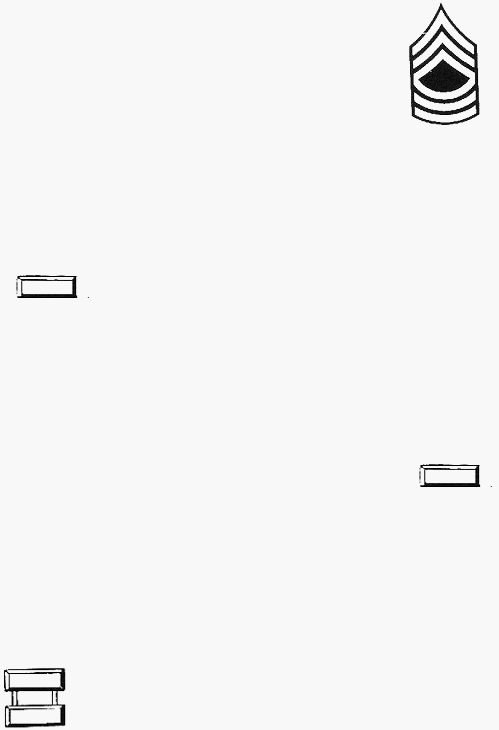
Mr Sgt jobs included the Sergeant Major of
a battalion, the chief administrative NCO, who
bossed the lst Sgts of the batteries, and the battalion
communications chief.
Mr Sgts and lst Sgts were the terror of all
enlisted men and most second lieutenants.
All sergeants who wore rockers were
collectively known as “First Three Graders.”
Master Sergeant
Officers wore their insignia of rank on their shoulders, near the seam where the
sleeve starts, if they were wearing coats or jackets. Otherwise they wore them on the
collars of their shirts or fatigues.
Second Lieutenant
Again starting at the bottom, the Second Lieutenant
(2nd Lt) wore one gold bar. He was nicknamed "Second
John" or "Shavetail." [In case you were wondering,
"Shavetail" is a title that goes 'way back.
It originated with the fact that an officer's shirt was made with epaulettes, or
shoulder straps, but an enlisted man's was not. If an enlisted man was promoted from the
ranks, rather than buy a new wardrobe of shirts, he might cut off the tails of his old ones
to make shoulder straps.] He was properly addressed as "Lieutenant" or "Lieutenant
Robinson." Before WWII, 2nd Lts were addressed as "Mister." but not after about 1940.
Next grade up is the First Lieutenant (lst Lt), who wears
one First lieutenant bar, exactly like a 2nd Lt, except that it
is silver. I don't know why silver gets more respect than
gold in the army, but it does.
First Lieutenant
A lst Lt is starting to get up in the world, although there is an old saw, "Rank among
lieutenants is like virtue among whores." He is nicknamed "First John," and is addressed
the same as a 2nd Lt. Jobwise, all lieutenants were interchangeable. They held all the
battery positions below battery commander, and a few staff jobs. Battery Executive
Officers and Forward Observers were lieutenants.
Captain
A Captain (Capt) wears two silver bars fastened together,
known as "railroad tracks." He has no particular nickname,
unless he § commands a battery or company, in which case
he may be referred to as the "Skipper" or the "Old Man.
He is addressed as "Captain" or "Captain O'Brien," and he rates substantial respect.
[There was a newspaper hawker at Camp Barkeley who never learned rank insignia, so
he called all enlisted men "Sergeant" and all officers "Captain" and got along fine.]
107
|
 |
|